How I Fixed Mold Issues in My Home After 20 Years of Ingesting It
Ever since I was a kid, I remember we've always had issues with mold in a few rooms at our house. One day, you would just notice that once again, a black smudge had appeared in the corners of the room and started spreading around. We tried everything, or almost everything we knew about, but any solution would keep it clean only for a year or two, before reappearing again.
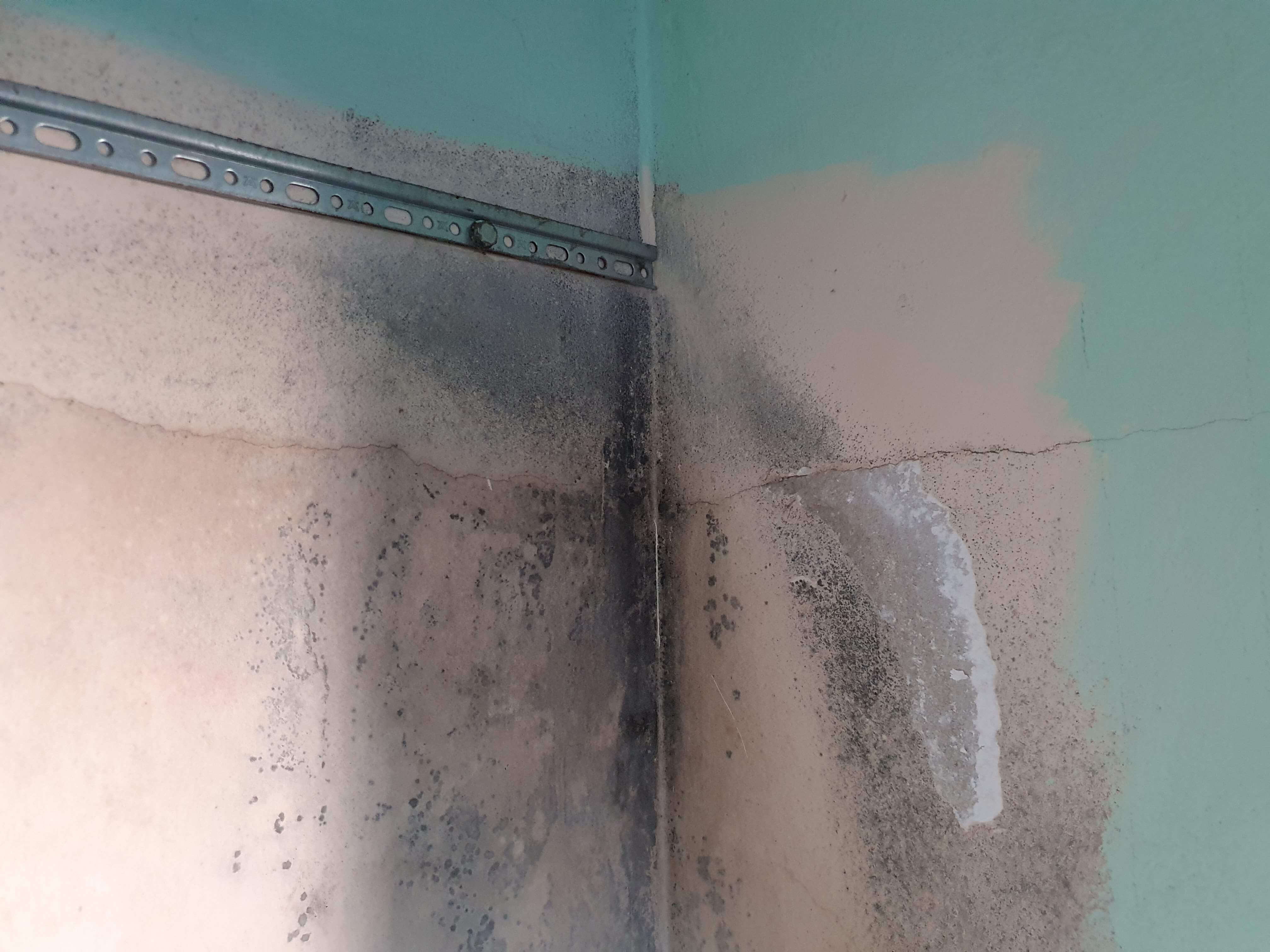
It's interesting (and shocking) how we almost considered that normal, so we went months without sanitizing it. So the thing spread and looked pretty gnarly. For a while, we lived in another place so we were subletting this apartment, and the tenants didn't seem to matter too much either. When I moved back home and started living in this apartment after them, it's been at least a few years without sanitizing it. Viewer discretion alert, this is what it looked like:
Here's a wider angle:
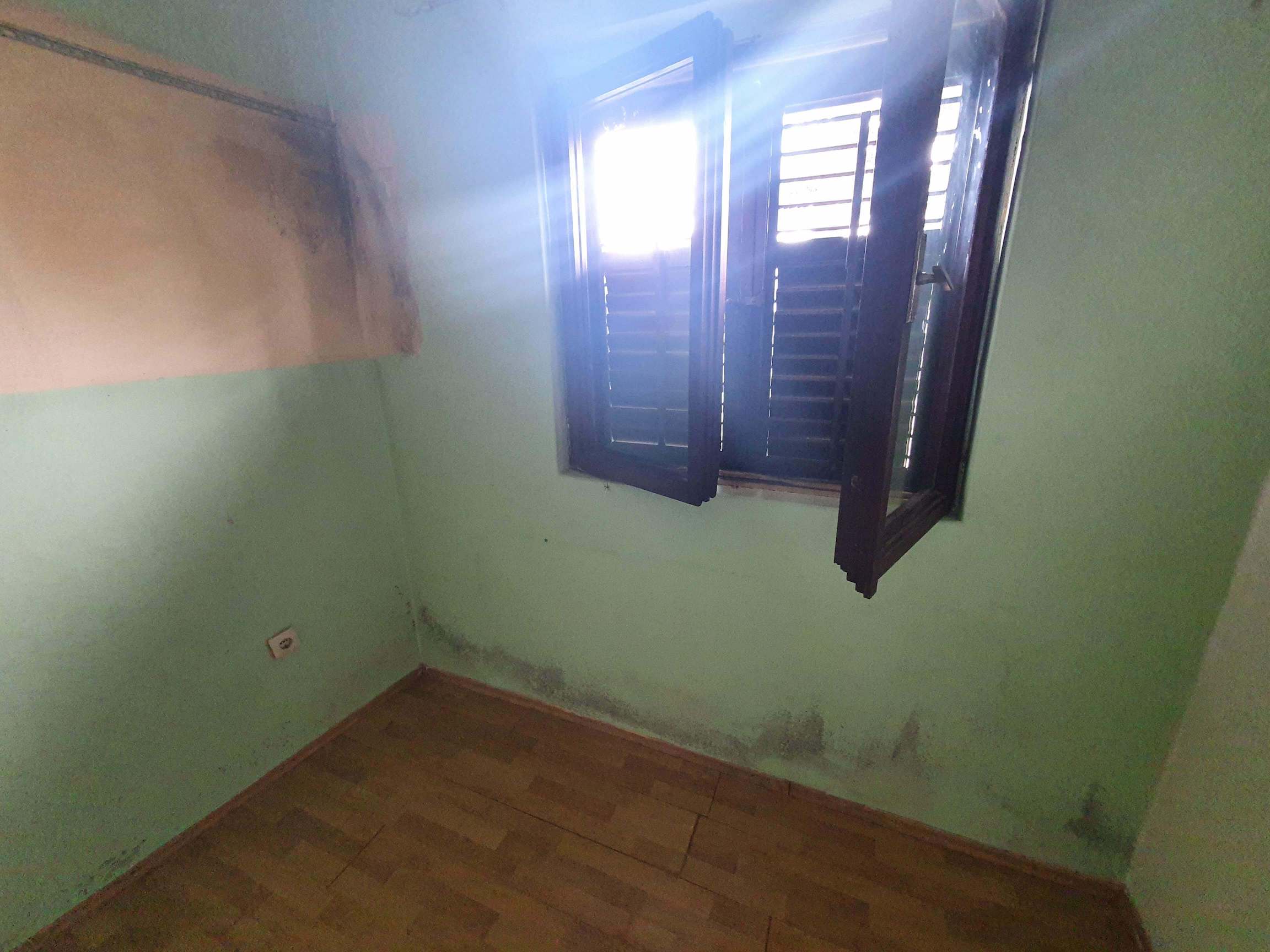
From what I remember, back then this used to look even worse, so it's interesting how everyone just considered it normal, and managed to sleep in rooms like these without losing a night's sleep.
It's only recently that I've set out to understand how and why it's all happening, and how to kill it for good. You'd be surprised to learn that the problem is the exact same thing that causes the effect in this image:

(Obligatory attribution for the image - I wanted to pour myself a cold one and take this picture myself, but I drink beer so rarely that this blog post has been on hold for a year now just waiting for that to happen.)

But let's go step by step.
What we tried
As you can see in the image, this was all happening in a small room that's only got one window looking towards the north. And in the Northern Hemisphere, this means it's never getting any direct sunlight. It is well understood that a cold dark room would be a good habitat for mold. But how to fix it?
Most naive approach is to buy a anti-fungal spray and put it all over the affected areas. You can supposedly just wipe it with a cloth and put a new coat of paint over it. This will remove parts of the mold, at least the visible part, but it won't remove it altogether. More importantly, it won't prevent the new mold from spreading up.
The better approach is to physically scrape it all down, by removing all the paint and the mold down to the wall itself. Then you can apply some anti-fungal spray just to be sure. Then you put plaster over it, to straighten the wall so paint will stick better. Then you put one coat of anti-fungal paint, and yes, that exists and people will gladly charge you extra for it, regardless if it actually does anything. Then you put a normal coat of paint over it, maybe two of them.
This looks like it's fixing the issue, and for us it did work for a while. But the next year, the mold would appear again.
This made us bring out the big guns - talk with contractors who build houses and should know how to fix this. Their first idea was - your roof is leaking, go fix that. I knew for sure this wasn't the case, because I could go up there while it was raining and see that it did not in fact leak. But the roof did warrant replacement, so we did it anyway. But of course, this did nada to fix the mold issues - the mold got back (was reborn?) the next year again.
At that point I stopped doing anything and made peace with the fact that I'm going to physically scrape it all every few years. Until...
How to Dry Clothes Indoors
A completely unrelated thing. I was looking for a way to dry clothes indoors. On the days when it's raining outside, I have no choice but to put the clothes rack somewhere inside. It takes a few days for it to dry fully, which was pretty annoying because by that point you already have a new batch of clothes you need to hang to dry. So the clothes rack is just always there, taking up precious real estate.
I researched a bit on why and how to improve it. First thing I found out, that is obvious in retrospect, is that drying clothes doesn't really make the water disappear into the void. No, it's actually the air in the room that takes the water from the clothes. This is entropy in action - the initial state of water being concentrated in one spot (your t-shirt) gets muddled by the arrow of time so it's spread all across the room. Same process as why the ice cube in a glass of water doesn't want to stay an ice cube.
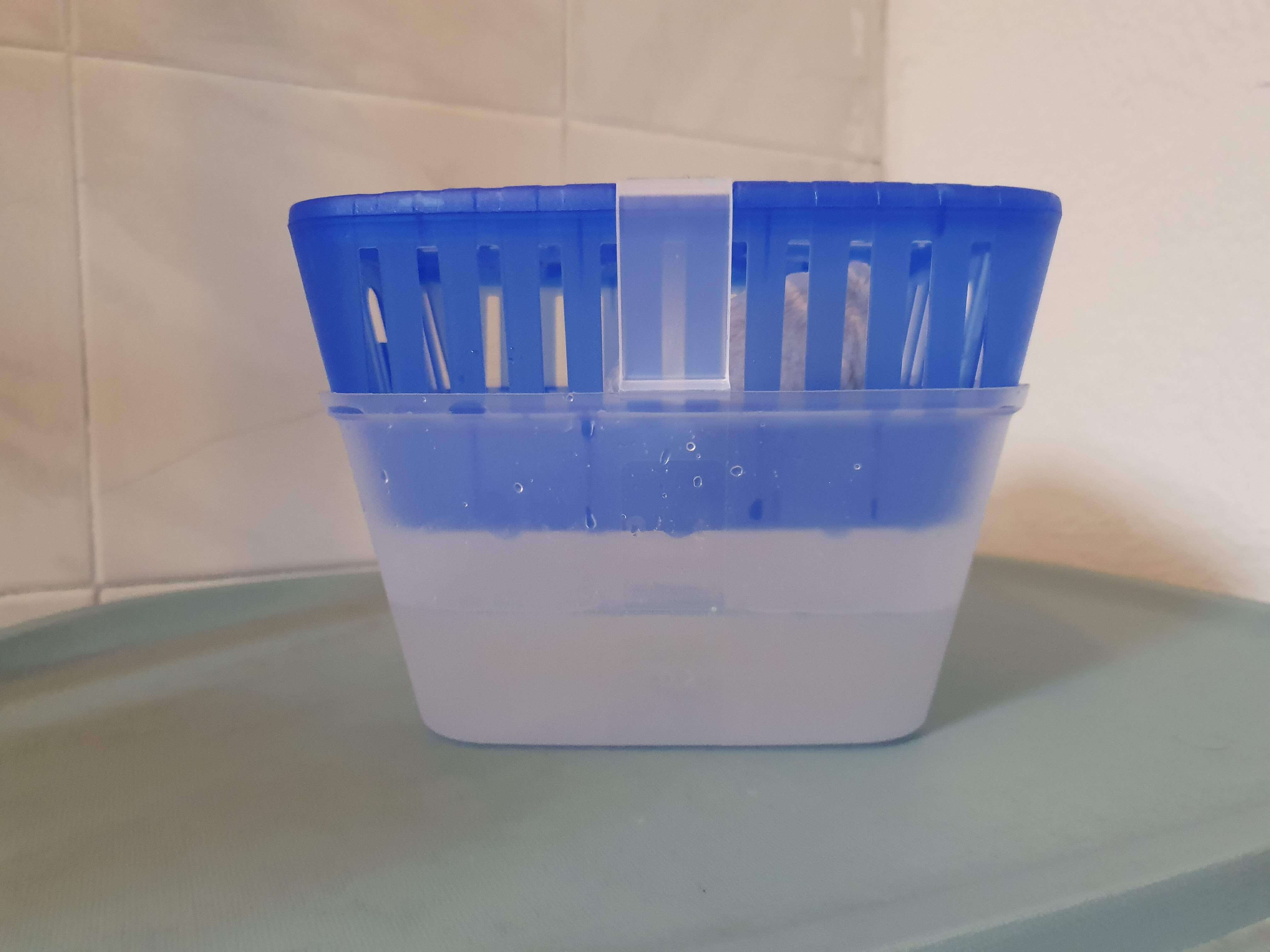
So logically, the drier the surrounding air is, the faster will the clothes water evaporate into it. So I bought a few de-humidifiers. First a passive one: basically just a cup with a very big "Silica Gel Do Not Eat" pack inside. This gathers some water from the room, but not enough to make a difference.
Then I got a better thing, the proper one that whirs and beeps.
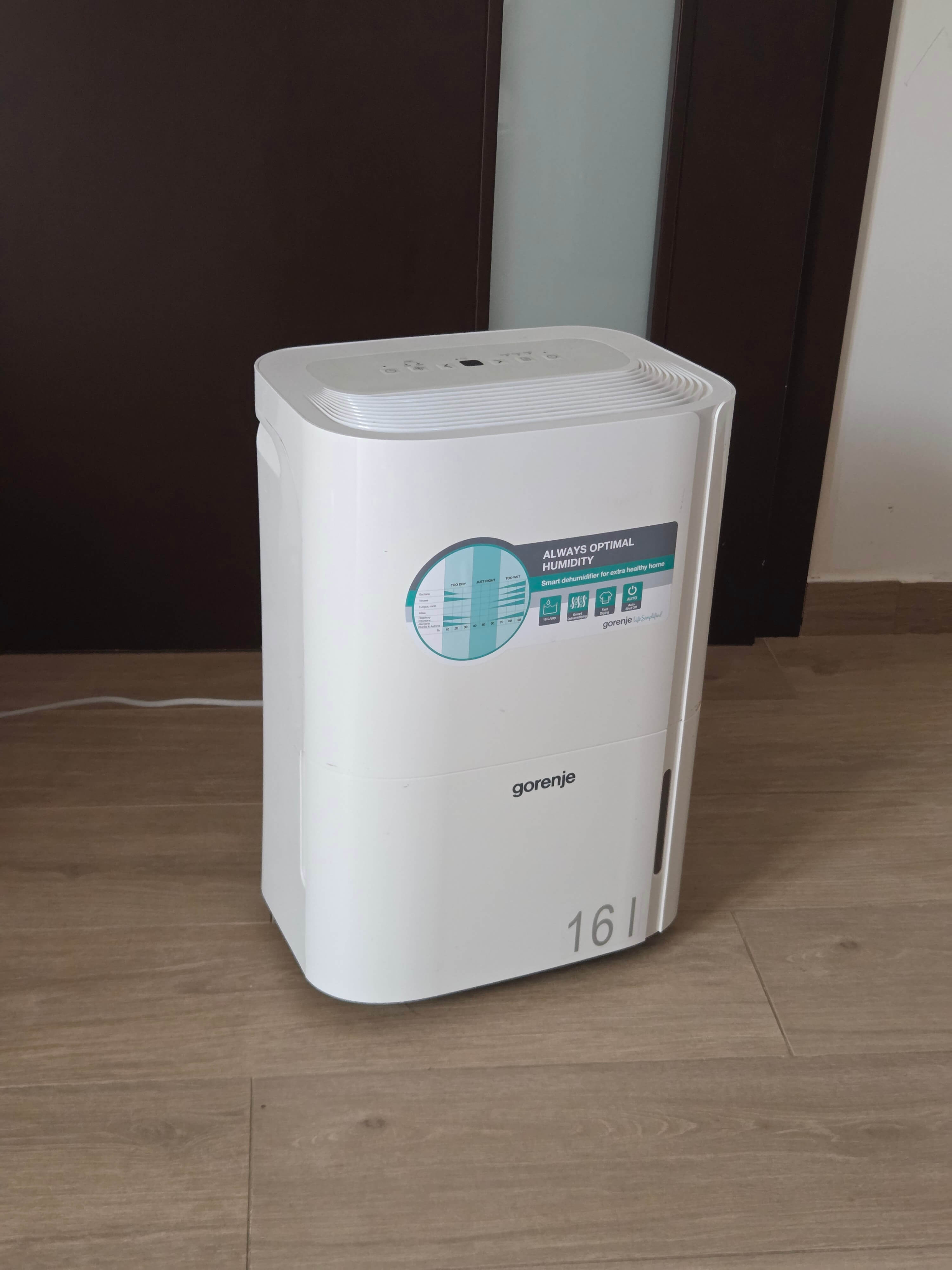
It actually works on a similar principle to an AC. Except that it doesn't cool the room, but just gathers the water inside of it. And it's crazy how much water this thing sucks from the air. It can fill its 3-liter tank of water in one night. It makes you wonder, is there really that much water in the air? Did the air in the room really contain three full liters of water? Apparently it did.
But anyway, if you put a dehumidifier in a room with the clothes rack, you can expect the clothes to be fully dry in like 12 hours, instead of 100+ that's usual.
Thank you for listening to my digression, now get ready for one more, but I promise it will make sense in the end.
Temperature Control
To get to the point of this blog post, we have one more physics question. You put a cold glass of beer on the table. The glass was dry on the outside. In 15 minutes, it gets wet. How?
And I don't want you just saying smugly: "it's condensation, duhh". But how, where are these droplets of water coming from?
Well, this happens because the temperature of the surrounding air determines how much water it can hold. For example, at 25 degrees Celsius, one liter of air (10x10x10 cm of volume) can hold up to 23 milligrams of water. But if you heat the room to 30 degrees, now it can hold 30 milligrams of water. Conversely, if you cool it down to 20 degrees, it can only hold around 17. Simply put, warmer air can hold more water in it than the cold one does.
What the cold glass of beer is doing is actually cooling the surrounding air. It cools the air just enough so it can't hold all of its water anymore, so it deposits it back into liquid, on the glass and around it. Hence the glass being wet.
That's what condensation really means - turning a gas into a liquid. Just like you can turn a water into vapour with warmth (evaporation), similarly you can turn it back into liquid with coldness (condensation).
What this means is that, we can use this cold glass of beer as a machine to extract the invisible water out of the air. Any cold item, really. The best way to dehumidify a room would be to put something really cold inside of it. Which is, if you remember, exactly what the electric dehumidifiers are doing!
Remember, they work in similar principle to the AC. They actually ARE ACs, just without the external unit to move the heat outside of the room. So they perform the full AC cycle inside of themselves, actually cooling the air - just moving it around itself, warming it back again, so the overall room temperature remains the same - but, during the time the air is in its "cold" phase, its water-carrying capacity is reduced, so the poor air can't hold it anymore, so it all just gets condensed into water. Dehumidification.
Mold
So to bring all the pieces together - how do you actually get rid of mold for good? With this knowledge from above, it's only now 100% clear to me. No one knew to explain this properly, so I had to learn it myself - by drying clothes and drinking beer. And I don't even enjoy these two activities that much.
In retrospect, the key point was that this room wasn't heated. This is fine for a room just used for sleeping, so it was okay enough to just leave the door open and let the stray living room air warm it as it goes there. But let's consider the implications of this.
This room was perpetually a few degrees colder than the living room. This means, any time the warm air would flow inside, it would cool down and release its water contents in the room. If a 25 °C air holds 23 milligrams of water per liter, then a temperature drop to 20 degrees (which can hold 17 mg), releases 6 milligrams of water per liter of the space. The room is ~23 m3, so 23,000 liters, which means that such a temperature drop unleashes 138 millileters of water inside of it. It's as if you spilled a small glass of water inside of the room. On its own, this number doesn't sound that horrible.
But it means that any hot humid air from anywhere in the apartment that comes into the room, either from cooking or showering, will condense here the easiest. So the situation looks more like "pouring a glass of water in this room once every few hours". In retrospect, such an unheated room seems like it was purposefully made to be "water condensation chamber", which is probably the last thing my parents wanted for the room their kids were sleeping in.
And almost like a heat map, you can see that most of the mold appeared behind where the wardrobe and the bed were. So you could make a wrong conclusion that it's something about a furniture.
This is simply because airflow is restricted there, so wet air can get stuck in there, and you can guess what happens when it cools down. But we had furniture on the other walls, but they didn't have any mold, so what gives?
Well, these were the outside walls of the house - they are exposed to the wind and rain, and they are facing the north where they simply never receive any sunlight. These walls are the coldest places of the entire room, so that's where the water condenses the easiest.
So yes, there needs to be some kind of ventilation between the furniture, so the air can flow freely. But the real solution to fix mold issues for us was - go heat that goddamned room. It might cost more, yes, but it might cost less than scraping it every year.
Writing this, though, it makes me realize that the real reason we had these issues for a while is... we were just poor.
Epilogue
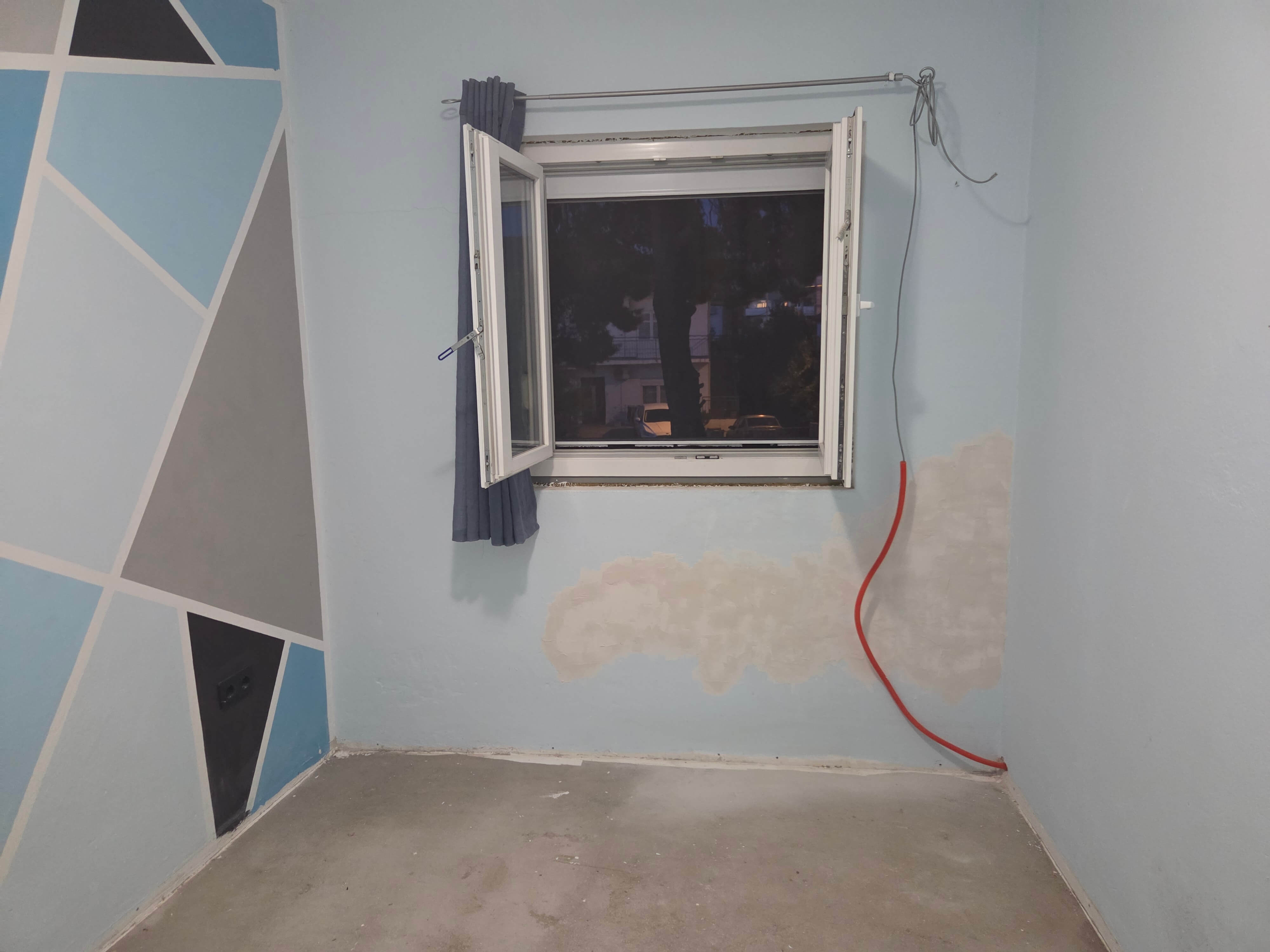
The room is good and fine today, thank you for asking. I did do one new mistake since then, though, of building some custom shelving that sat flush-dab directly on the wall. I was thinking it's a genius move to maximize available space in the room, but in reality it was just another great way to trap moisture behind it. Ventilation, people! So I had to do some scraping action again.
For the end, to purify your mind of pictures of mold I exposed you to, here's one WIP image of that last scraping process. Notice that, all the other walls, including the fancy patterns ones, remained mold-free for the last 5 years!